


The consumer packaged goods (CPG) industry is facing a turbulent market as tariffs on imports hover around 25%, driving higher costs for raw materials, packaging, and ingredients. With many essential components sourced internationally—such as spices, fresh produce, supplements, and aluminum for packaging—manufacturers must navigate rising expenses, supply chain disruptions, and shifting consumer demand.
These challenges come at a time when consumer behavior is also evolving. Faced with price increases, shoppers are shifting toward private-label brands, bulk purchasing, and cost-saving alternatives, creating new competitive pressures for CPG manufacturers.
Meanwhile, retailers are demanding greater flexibility and just-in-time inventory to manage fluctuating costs and shifting demand patterns.
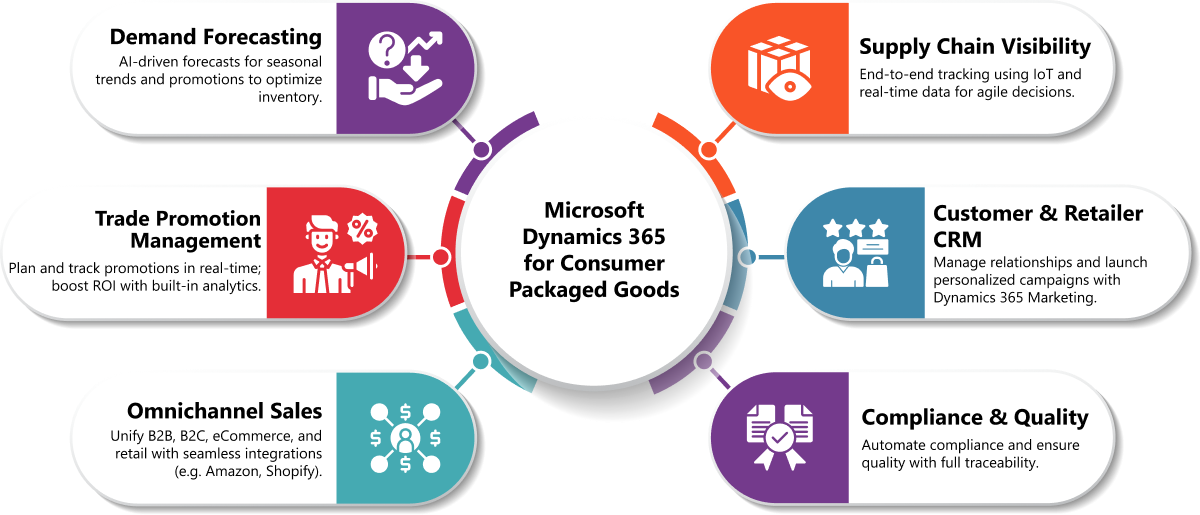
To succeed in this environment, CPG manufacturers must strengthen supply chain resilience, optimize production, and control costs while maintaining agility to respond to sudden tariff changes and market fluctuations. Microsoft Dynamics 365 Finance and Supply Chain provides real-time visibility, automated workflows, and AI-driven forecasting, helping companies streamline operations, stabilize pricing, and protect profitability despite economic uncertainty.

End-to-End Supply Chain Visibility
CPG manufacturers must manage complex supply chains that span multiple suppliers, distribution channels, and retail partners. D365 Supply Chain enables real-time monitoring and control by:
By centralizing supply chain data and integrating AI-driven analytics, manufacturers can quickly adjust sourcing, mitigate disruptions, and improve operational efficiency.

Production planning and tariff impact mitigation
Manufacturing costs are rising due to increased tariffs on imported materials like spices, oils, packaging components, and aluminum. D365 helps optimize production by:
With real-time production insights, manufacturers can adapt quickly to shifting costs, prevent supply chain bottlenecks, and maintain profitability despite tariff volatility.

Inventory and demand forecasting
Uncertain tariffs mean that costs and availability of raw materials can change overnight. To stay ahead, CPG manufacturers must optimize inventory management and demand planning. D365 enables:
By leveraging predictive analytics and real-time data, manufacturers can proactively manage inventory levels, stabilize costs, and minimize financial risks

Supplier & Procurement Optimization
CPG manufacturers must diversify their supplier base to mitigate tariff risks and maintain cost efficiency. D365 enhances procurement strategies by:
With a smarter, more flexible procurement approach, manufacturers can reduce sourcing risks and stabilize production costs despite unpredictable tariffs.
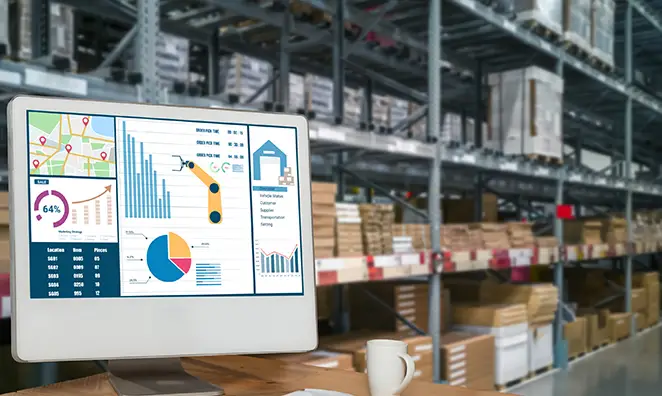
With tariffs increasing operational expenses, CPG manufacturers need greater visibility into financial performance. D365 Finance helps by:
By centralizing financial data and automating cost controls, manufacturers can navigate tariff-related expenses and improve profitability.
As tariffs drive up product costs, CPG manufacturers must balance competitive pricing with margin protection. D365 enables:
With real-time pricing insights and cost analysis, manufacturers can respond proactively to price sensitivity and maintain profitability.
Real-time supply chain tracking to mitigate sourcing risks and improve operational agility
Integrated financial and pricing insights to balance costs, margins, and competitive positioning
Successfully implementing an ERP tailored to the CPG industry requires deep expertise in supply chain, pricing, and compliance management. Ascent Innovations is a trusted Microsoft partner with extensive experience helping CPG manufacturers modernize operations, optimize sourcing, and drive measurable ROI.


CPG manufacturers must adapt to shifting tariffs, supply chain volatility, and evolving consumer expectations to remain competitive. Companies relying on legacy systems and disconnected processes risk higher costs, slower response times, and reduced market share.
D365 Finance and Supply Chain provides a scalable, AI-driven platform to help CPG manufacturers optimize sourcing, control costs, and maintain pricing agility, ensuring they can adapt to market uncertainty while driving profitability.
By partnering with Ascent Innovations, CPG manufacturers can modernize their ERP, improve financial resilience, and maintain operational excellence—positioning their business for success in a rapidly changing global trade environment.
Georgia-based contract manufacturer of mattresses & pillows.
Supplier for multiple brands.
Acquired multiple factories across the US.
Chicago-based (acquired by Swedish company) telecom switch operator – leader in CPaaS.
AI-powered apps, API, and network connectivity.
Connecting 100B+ calls and 700B+ texts every year.
Mediterranean cuisine – Kitchen with a 2-tier production and
delivery model.
Centralized kitchen for R&D, Recipe Mgmt., Purchasing.
Retail Outlets for final step production & customizing orders.
Ascent365 helps Consumer Packaged Goods companies adapt to changing market conditions by leveraging solutions like Microsoft Dynamics 365 Supply Chain Management and Microsoft Dynamics 365 Finance. We enable real-time supply chain visibility, AI-driven demand forecasting, and dynamic pricing strategies—helping businesses manage cost pressures, respond to shifting consumer demand, and maintain profitability.
Ascent365 follows a business-first, ROI-driven approach tailored to the unique challenges of the CPG industry. From strategy and implementation to continuous optimization, we deliver end-to-end support that improves supply chain resilience, optimizes costs, and enables data-driven decision-making for long-term growth.
CPG companies can achieve real-time visibility by integrating data across suppliers, production, and distribution. This enables better tracking of materials, improved logistics coordination, and faster response to disruptions.
AI-driven forecasting analyzes historical data and market trends to predict demand more accurately. This helps optimize inventory levels, reduce waste, avoid stockouts, and improve overall supply chain efficiency.
Manufacturers can manage costs by optimizing production schedules, adopting flexible sourcing strategies, and using analytics to predict cost fluctuations. This allows businesses to adjust operations proactively and maintain margins.
Organizations can improve procurement by automating supplier evaluations, enhancing collaboration through digital portals, and using analytics to make better sourcing decisions. This reduces risk and improves cost efficiency.
Integrating financial data with operations provides real-time insights into costs, profitability, and cash flow. It also enables dynamic pricing strategies, helping companies stay competitive while protecting margins in a volatile market.